

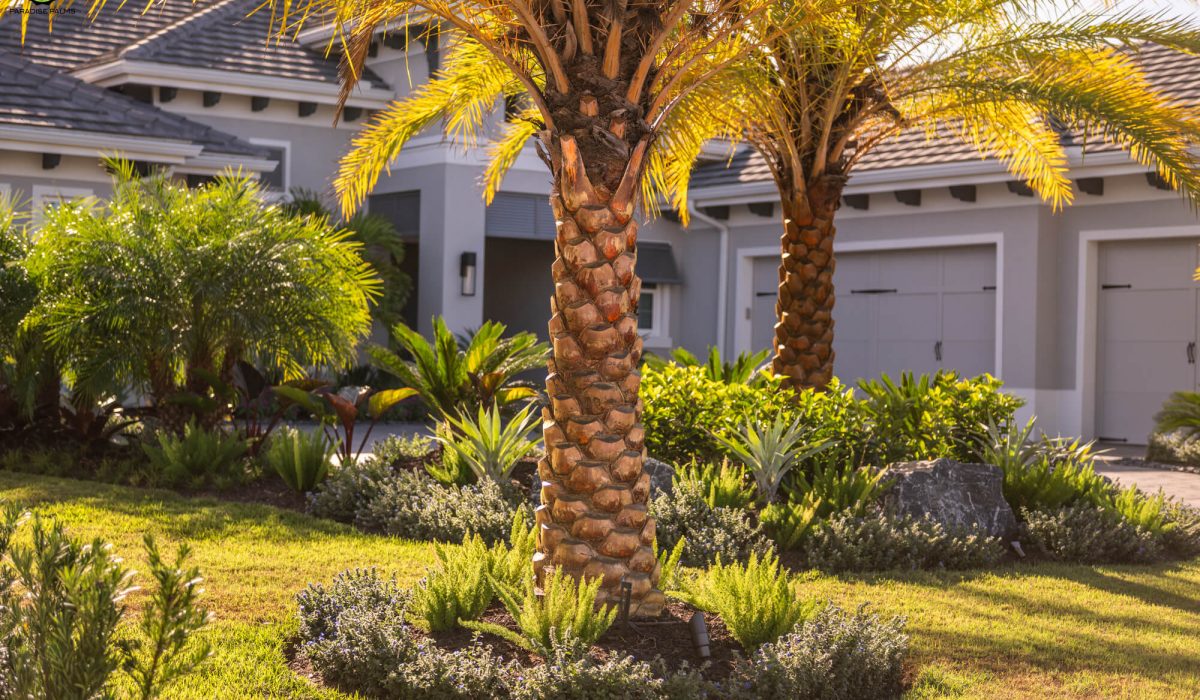
Clean palms in Florida come down to timing, technique, and avoiding the common “over-trim” mistakes that lead to stress, pests, and an untidy look.
If you’re searching for palm tree trimming Florida guidance, you’re not alone. Palms are one of the most visible parts of a Florida landscape, and when they’re trimmed correctly they instantly elevate curb appeal. When they’re trimmed the wrong way, they can look rough, decline faster, and become a bigger maintenance problem than they should be. This guide covers when to trim, what to remove, what to leave, and how to keep palms looking clean and healthy year-round in Florida conditions.
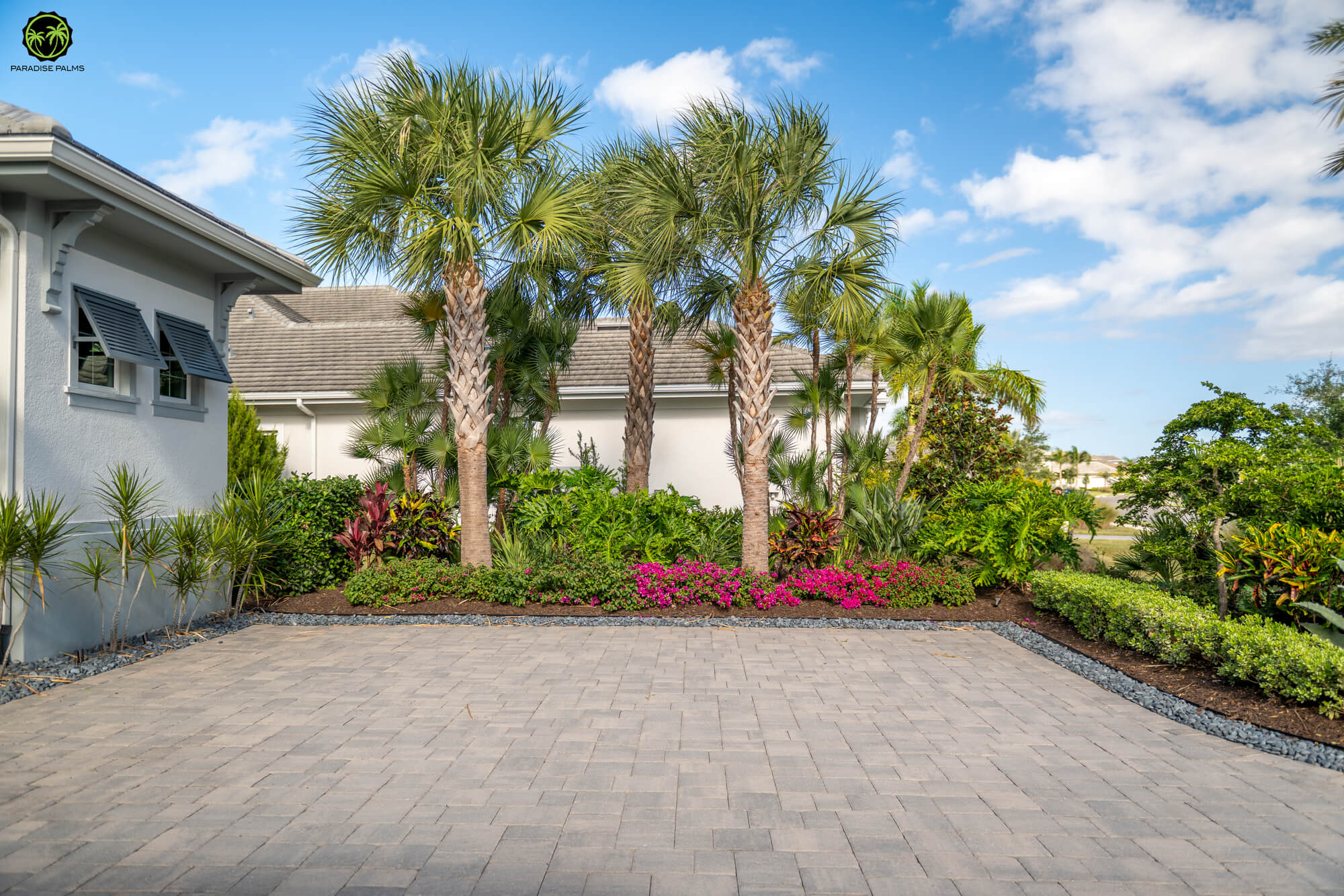
When Should You Trim Palm Trees in Florida?
For most properties, palm tree trimming in Florida is best handled as needed rather than on a rigid schedule. The main goal is to remove fronds that are fully dead, damaged, or hanging low enough to look messy or create a safety issue. In many Florida neighborhoods, that means light trimming one to a few times per year depending on the palm variety, wind exposure, and how quickly the canopy drops older fronds.
A simple rule: if the frond is truly brown, broken, or dragging downward, it’s usually a candidate for removal. If it’s green and still supporting the canopy, it’s typically better left alone.
The Florida “Do Not Over-Trim” Rule
One of the biggest mistakes we see with palm tree trimming Florida jobs is over-trimming. Over-trimming might look “neat” for a week, but it can stress the palm, reduce its ability to recover from heat and wind, and create a thinner, less natural canopy over time.
A healthy palm should keep a full, balanced crown. The cleanest look is not the smallest look—it’s a canopy that appears symmetrical, intentional, and strong.
What to Cut (and What to Leave)
If you want palms to stay healthy and look premium, trimming should be selective. Think of it as removing obvious problems, not “shaping” the entire tree.
- Remove: fully brown fronds, broken fronds, fronds hanging low, and fronds that are rubbing structures or blocking visibility.
- Remove: old fruit/seed stalks if they’re messy, dropping debris, or attracting pests.
- Leave: green fronds that are still supporting the canopy and contributing to a full crown.
That balance is what keeps palms looking clean without stripping away what the palm needs to stay strong.
Why “Hurricane Cuts” Hurt Palms
In Florida, some people assume trimming palms aggressively helps during storms. The reality is that severe “hurricane cuts” can weaken the palm and make it more vulnerable to stress. Removing too many healthy fronds reduces the palm’s ability to produce energy, recover from weather events, and maintain its natural form.
A better approach is regular, correct trimming plus making sure the surrounding landscape is maintained so wind-driven debris doesn’t collect in the canopy or around the base.
How to Keep Palms Looking Clean Between Trims
Most of the “messy palm” problem isn’t just the fronds—it’s the area around the palm. A clean palm base and tidy bed instantly makes the whole tree look more intentional, even if you haven’t trimmed in a while.
- Keep the bed edge crisp: a defined ring or bed line stops grass creep and makes the palm feel designed.
- Use tidy base planting: low plants that don’t sprawl keep the area clean and easy to maintain.
- Refresh finish when needed: consistent mulch depth and weed control prevent that “thin, patchy bed” look.
When the base stays clean, the entire palm reads as a finished focal point instead of a random tree in the lawn.
Safety and Tools: Why Palm Trimming Isn’t a DIY Weekend Project
Palm trimming looks simple until you’re dealing with height, sharp frond stems, and heavy material dropping near walkways, driveways, roofs, or vehicles. Even smaller palms can cause injury if fronds fall unpredictably. On taller palms, the risk increases quickly.
If you’re unsure, it’s usually smarter to have it handled professionally so trimming stays clean, safe, and consistent with long-term palm health.
Signs Your Palms Need Attention
Here are a few clear signs it’s time to schedule palm tree trimming in Florida: fronds hanging low into paths or drive areas, an uneven crown that looks lopsided after storms, heavy fruit/seed debris dropping regularly, or a canopy that’s holding broken fronds that catch the eye from the street.
Addressing these early keeps the palm looking polished and prevents a small cleanup from becoming a bigger restoration later.
Want Cleaner, Healthier Palms Year-Round?
Correct palm trimming is about keeping the canopy strong, removing only what’s needed, and maintaining a clean base so your landscape looks intentional. If your palms look overgrown, uneven, or messy after storms, a clean trim and a tidy bed refresh can make an immediate difference—especially in Florida where curb appeal is year-round.
FAQ: Palm Tree Trimming Florida
How often should palm trees be trimmed in Florida?
Most palms should be trimmed only as needed—typically when fronds are fully brown, damaged, or hanging low. Many properties need light trimming one to a few times per year depending on the palm type and growth.
What month is best for palm tree trimming in Florida?
There isn’t one perfect month, but many homeowners schedule trimming when dead fronds become visible or after stormy periods. The safest approach is trimming based on condition, not a strict calendar.
Should you cut green fronds off palm trees?
In most cases, no. Green fronds help the palm stay healthy and maintain a full canopy. Over-trimming can stress the palm and make it look sparse over time.
What is a hurricane cut and is it recommended?
A hurricane cut is an aggressive trimming style that removes many healthy fronds. It is generally not recommended because it can weaken the palm and reduce its ability to recover from stress.
How can I keep palms looking clean between trims?
Keep the area around the base tidy with a crisp bed edge, low-maintenance planting, and consistent mulch depth. A clean base makes the entire palm look more intentional.